
Are you looking to strengthen the bond between you and your furry friend? Teaching your dog tricks at home is an excellent way to do so. Not only will it provide mental stimulation and exercise for your dog, but it will also create a sense of accomplishment and fun for both of you. In this article, we'll dive into the world of dog training and explore the best methods for teaching your dog tricks at home. So, grab some treats, get comfortable, and let's get started.
Preparation is Key
Before you begin teaching your dog tricks, it's essential to prepare yourself and your environment. First, choose a quiet and distraction-free area where your dog can focus on you. Make sure you have plenty of treats and toys on hand to use as rewards. It's also crucial to understand that every dog is different, and what works for one dog may not work for another. Be patient, and don't get discouraged if your dog doesn't pick up a trick right away. With time and practice, your dog will learn to trust and respond to you.
Another critical aspect of preparation is understanding your dog's personality and learning style. If your dog is a high-energy breed, you may need to incorporate more physical activity into your training sessions. On the other hand, if your dog is more laid-back, you can focus on mental stimulation and puzzle toys.

Basic Training Principles
When it comes to teaching your dog tricks, there are a few basic principles to keep in mind. First, start with simple tricks and gradually increase the difficulty level as your dog becomes more confident. Use positive reinforcement techniques, such as treats and praise, to encourage good behavior. Avoid punishment or negative reinforcement, as this can create anxiety and make the learning process more challenging. Instead, focus on rewarding your dog for correct behavior, and they will quickly learn to associate the desired action with the reward.
Consistency is also vital when teaching your dog tricks. Choose a specific command or cue for each trick, and use it every time you practice. This will help your dog understand what you want them to do and reduce confusion. For example, if you're teaching your dog to sit, use the command "sit" every time, and avoid using other words or phrases that may confuse them.
Teaching Basic Tricks
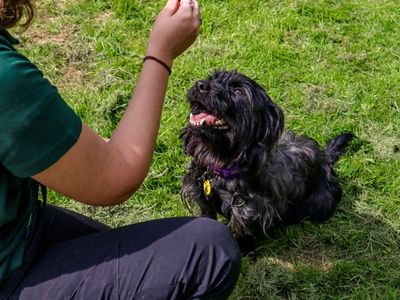
Now that we've covered the basics, let's dive into some simple tricks you can teach your dog at home. One of the most basic tricks is the "sit" command. To teach your dog to sit, hold a treat above their head and slowly move it backwards towards their tail. As they follow the treat with their nose, their bottom will lower into a sitting position. Once they're in the sit position, praise them and give them the treat. Repeat this process several times, and your dog will quickly learn to associate the command "sit" with the action.
Another simple trick is the "stay" command. To teach your dog to stay, start by having them sit or lie down, then take a few steps back and say stay.If they get up, go back to the beginning and try again. Gradually increase the distance and time you're away from your dog, and reward them for remaining in the stay position.

Advanced Tricks and Techniques
Once your dog has mastered basic tricks, you can move on to more advanced techniques. One fun trick is the "shake" command, where your dog learns to shake hands with you. To teach your dog to shake, hold a treat in your hand and place it in front of their nose. As they sniff the treat, lift your hand up and down, and they will follow the motion with their head. Once they've got the hang of it, you can add the verbal command "shake" and reward them with the treat.
Another advanced trick is the "roll over" command. To teach your dog to roll over, start by having them sit and holding a treat above their head. Slowly move the treat in a circle, and they will follow the motion with their nose. As they follow the treat, they will naturally roll onto their back. Once they're in the roll over position, praise them and give them the treat. With practice, your dog will learn to roll over on command, and you can even add fun variations like rolling over multiple times or in different directions.
For more complex tricks, you can use a technique called shaping.Shaping involves breaking down a complex behavior into smaller steps and rewarding your dog for each step. For example, if you want to teach your dog to play dead, you can start by having them lie down, then roll onto their side, and finally onto their back. Reward them for each step, and gradually increase the complexity of the behavior.

Common Challenges and Solutions
While teaching your dog tricks can be a fun and rewarding experience, there are often challenges that arise along the way. One common challenge is distractions, such as other people, dogs, or loud noises. To overcome distractions, try training your dog in a quiet area with minimal distractions, then gradually increase the level of distraction as they become more confident. You can also use high-value rewards, such as treats and praise, to motivate your dog and keep them focused.
Another common challenge is frustration, both for you and your dog. If your dog is not picking up a trick, it can be frustrating for both of you. To avoid frustration, take breaks and come back to the training session when you're both feeling calm and relaxed. You can also try breaking the trick down into smaller steps or using a different training approach. Remember, every dog learns at their own pace, and with patience and persistence, your dog will master even the most challenging tricks.
Conclusion
Teaching your dog tricks at home is a fun and rewarding experience that can strengthen the bond between you and your furry friend. With patience, consistency, and positive reinforcement, your dog can learn a wide range of tricks, from basic commands like "sit" and "stay" to more advanced techniques like "shake" and "roll over." Remember to be patient and not to get discouraged if your dog doesn't pick up a trick right away. With time and practice, your dog will learn to trust and respond to you, and you'll have a strong foundation for a lifelong friendship. So, grab some treats, get training, and enjoy the journey of teaching your dog tricks at home.
