
German Shepherds are one of the most popular breeds in the world, and for good reason. They're intelligent, loyal, and make great companions. However, as a beginner, training a German Shepherd can seem like a daunting task. With their high energy levels and strong will, it's easy to feel overwhelmed. But don't worry, with the right guidance and tips, you can train your German Shepherd to be a well-behaved and loving member of your family. In this article, we'll cover the basics of German Shepherd training and provide you with some valuable tips to get you started.
Understanding Your German Shepherd's Temperament
Before you start training your German Shepherd, it's essential to understand their temperament. German Shepherds are a breed that thrives on mental and physical stimulation. They're highly intelligent and need to be challenged to prevent boredom and destructive behavior. They're also naturally protective of their family and territory, which can make them wary of strangers. By understanding these traits, you can tailor your training approach to meet their unique needs and personality.

Setting Clear Boundaries and Expectations
One of the most critical aspects of training a German Shepherd is setting clear boundaries and expectations. German Shepherds are highly responsive to structure and clear communication. They need to know what's expected of them and what the rules are. Start by establishing a routine and sticking to it. This includes regular feeding times, exercise, and training sessions. Consistency is key when it comes to training a German Shepherd, so make sure everyone in the household is on the same page.
When it comes to training, it's essential to use positive reinforcement techniques. German Shepherds respond well to rewards and praise, rather than punishment and negative reinforcement. Use treats, toys, and affection to encourage good behavior and discourage bad behavior. Be clear and concise with your commands, and avoid using complex sentences or long phrases. German Shepherds are highly attuned to tone and body language, so make sure you're using a calm and assertive tone when giving commands.
Basic Obedience Commands
Once you've established a routine and set clear boundaries, it's time to start teaching basic obedience commands. German Shepherds are highly intelligent and can learn a wide range of commands, but it's essential to start with the basics. Begin with simple commands like "sit," "stay," "come," and "leave it." Use positive reinforcement techniques and be patient with your dog as they learn. Remember, German Shepherds are highly energetic, so make sure you're providing plenty of exercise and mental stimulation to prevent boredom and distraction.
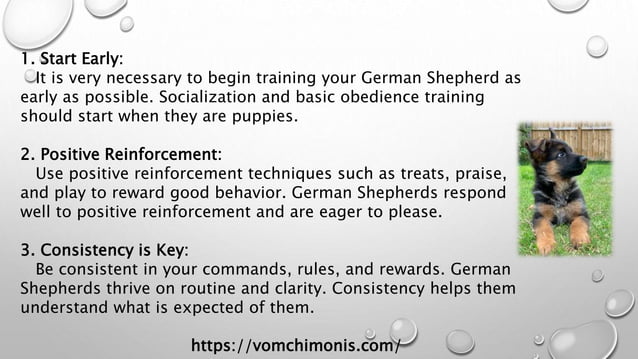
One of the most effective ways to train a German Shepherd is through repetition and consistency. Practice obedience commands regularly, and gradually increase the difficulty level as your dog becomes more confident. Use different locations, distractions, and scenarios to challenge your dog and help them generalize their learning. Be patient and don't rush the training process. German Shepherds are highly intelligent, but they can be stubborn at times, so it's essential to remain calm and patient.
Housebreaking and Crate Training
Housebreaking and crate training are essential components of German Shepherd training. German Shepherds are prone to accidents and destructive behavior if they're not properly housebroken and crate trained. Start by establishing a routine and taking your dog outside to the same spot each time. Use positive reinforcement techniques and praise your dog when they eliminate outside. If you're using crate training, make sure the crate is large enough for your dog to stand up, turn around, and lie down comfortably.
Crate training can be an effective way to housetrain your German Shepherd, as it helps to prevent accidents and destructive behavior. However, it's essential to introduce the crate gradually and make it a positive experience for your dog. Start by leaving the crate door open and encouraging your dog to enter voluntarily. Once your dog is comfortable with the crate, you can start closing the door and leaving them alone for short periods.

Advanced Training and Socialization
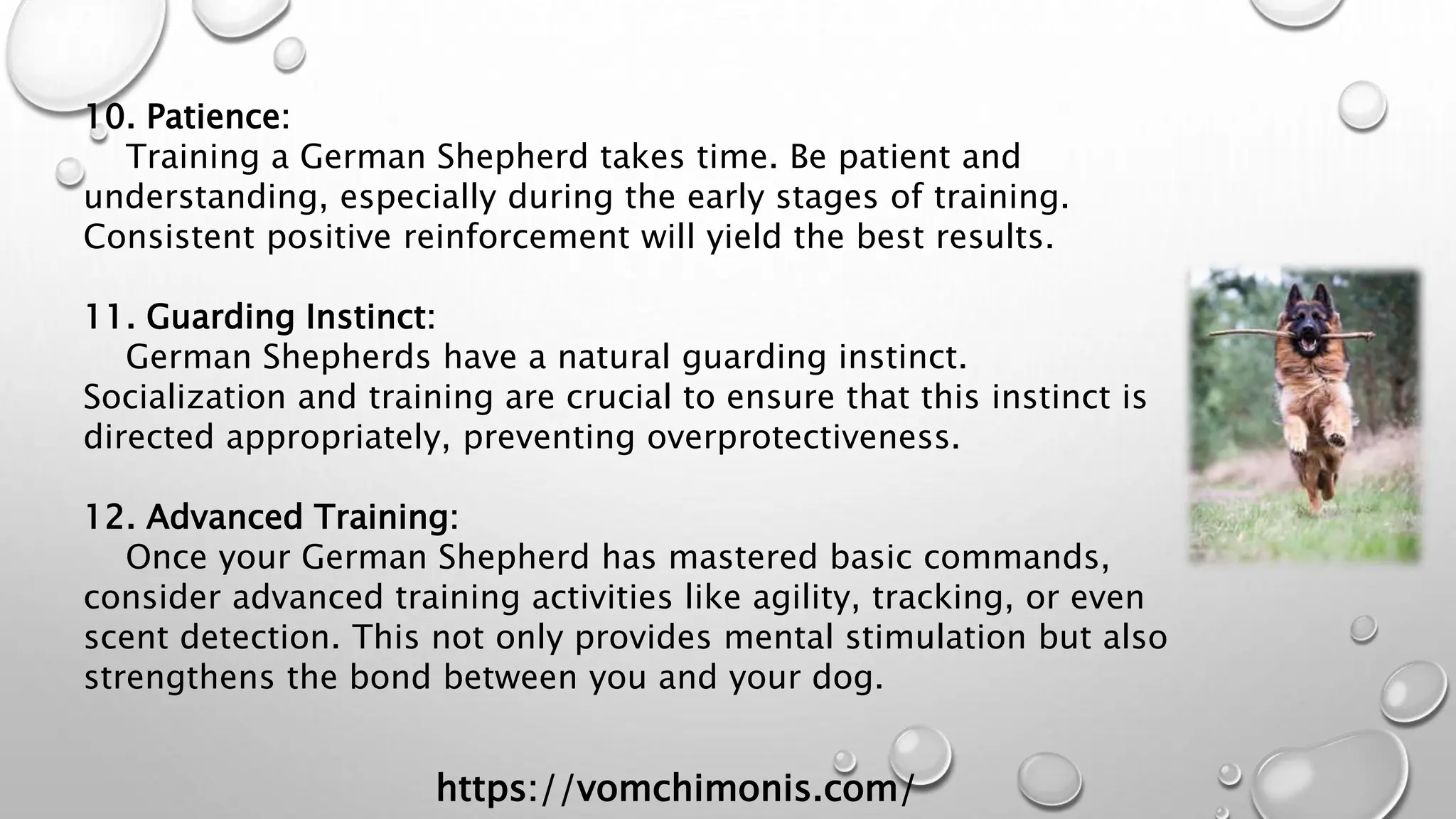
Once your German Shepherd has mastered basic obedience commands and is housebroken, it's time to move on to advanced training and socialization. German Shepherds are highly intelligent and thrive on mental and physical stimulation. They need to be challenged and engaged to prevent boredom and destructive behavior. Consider enrolling your dog in agility, obedience, or tracking classes to provide them with the physical and mental stimulation they need.
Socialization is also a critical component of German Shepherd training. German Shepherds can be wary of strangers and may become protective of their family and territory if they're not properly socialized. Start by introducing your dog to new people, places, and experiences gradually. Use positive reinforcement techniques and reward your dog for calm behavior. Avoid pushing your dog beyond their comfort zone, as this can create anxiety and fear.
Common Mistakes to Avoid
When training a German Shepherd, there are several common mistakes to avoid. One of the most significant mistakes is using punishment and negative reinforcement. German Shepherds respond poorly to punishment and may become fearful or aggressive if they're punished or scolded. Instead, use positive reinforcement techniques and reward good behavior. Another common mistake is being inconsistent or unclear with commands. German Shepherds thrive on structure and clear communication, so make sure you're using a consistent tone and body language when giving commands.
Finally, don't underestimate the importance of exercise and mental stimulation. German Shepherds are highly energetic and need plenty of physical and mental stimulation to prevent boredom and destructive behavior. Provide your dog with regular exercise, such as walks, runs, or playtime in the park. Also, engage their mind with puzzle toys, obedience training, or scent work. By providing your dog with the physical and mental stimulation they need, you can help prevent behavioral problems and create a happy, healthy, and well-adjusted companion.
In conclusion, training a German Shepherd requires patience, consistency, and positive reinforcement. By understanding your dog's temperament, setting clear boundaries and expectations, and using positive reinforcement techniques, you can train your German Shepherd to be a well-behaved and loving member of your family. Remember to be patient and don't rush the training process. With time, effort, and the right guidance, you can help your German Shepherd reach their full potential and become a loyal and loving companion.