
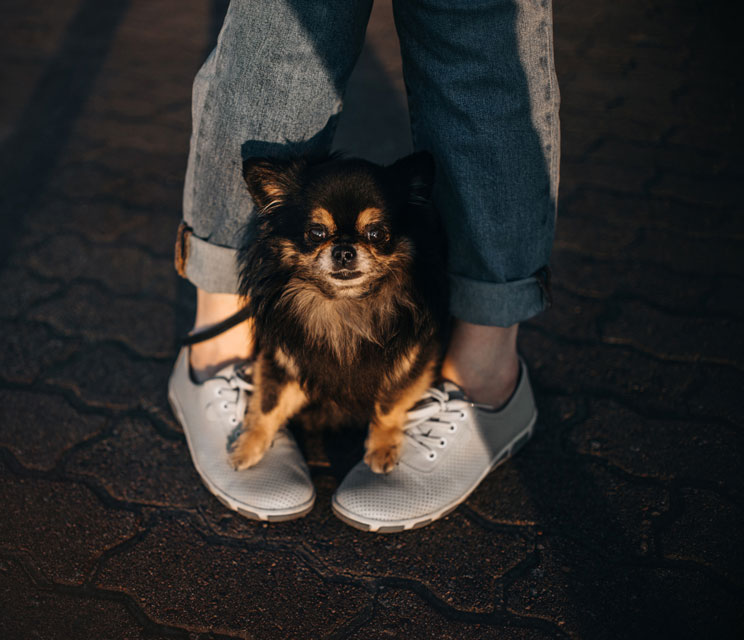
Have you ever found yourself sitting on the couch, watching your favorite TV show, when suddenly you feel a gentle nudge on your feet? You look down, and there's your furry friend, comfortably sitting on your feet, looking up at you with those adorable eyes. If you're a dog owner, you've probably experienced this scenario more than once, and you might be wondering, why does my dog sit on my feet? In this article, we'll delve into the possible reasons behind this behavior, and explore what it might mean for your relationship with your dog.
Introduction to Canine Behavior
To understand why your dog sits on your feet, it's essential to know a bit about canine behavior and body language. Dogs are social animals that thrive on interaction and affection from their human family members. They have a unique way of communicating with us, using a combination of vocalizations, facial expressions, and physical gestures. By paying attention to these cues, we can gain insight into what our dogs are trying to tell us. So, the next time your dog sits on your feet, take a moment to observe their behavior and see if you can decipher what they might be trying to communicate.
 Why Does My Dog Sit on My Feet Introduction to Canine Behavior" loading="lazy" style="max-width:700px;width:100%;height:auto;border-radius:8px;">
Reasons Why Your Dog Sits on Your Feet
Now, let's explore some possible reasons why your dog might be sitting on your feet. One reason could be that your dog is seeking attention and affection. By sitting on your feet, they're able to get close to you and receive pets, scratches, and treats. This behavior can be especially common in dogs that are attention-seekers or have separation anxiety. Another reason might be that your dog feels comfortable and secure when they're near you. Sitting on your feet could be a way for them to feel protected and safe, especially in new or unfamiliar environments.
Some dogs might also sit on their owner's feet due to a natural instinct to be close to their pack leader. In the wild, dogs often sleep and rest in close proximity to each other, and this behavior can be seen in domesticated dogs as well. By sitting on your feet, your dog might be trying to establish a sense of closeness and bonding with you, their pack leader. Additionally, some dogs might sit on their owner's feet simply because it's a comfortable and convenient spot to rest. If your dog is tired or feeling lazy, they might find that sitting on your feet is the easiest way to take a break and relax.
Health and Comfort Factors
In some cases, a dog's decision to sit on their owner's feet might be influenced by health or comfort factors. For example, older dogs or dogs with arthritis might find it more comfortable to sit on a soft, warm surface like their owner's feet, rather than on a hard floor. Similarly, dogs with anxiety or stress might find that sitting on their owner's feet helps to calm them down and reduce their stress levels. If you've noticed that your dog is sitting on your feet more frequently, it might be worth considering whether there are any underlying health issues that need to be addressed.

It's also possible that your dog is sitting on your feet because they're trying to regulate their body temperature. Dogs often use their owners as a source of heat, and sitting on their feet can be a way for them to warm up or cool down. This behavior can be especially common in dogs that are prone to feeling cold, such as short-haired breeds or dogs with thin coats. If you've noticed that your dog is sitting on your feet more frequently during certain times of the year, it might be worth considering whether temperature is a factor.
Training and Behavioral Considerations
While it's natural for dogs to want to be close to their owners, there are some cases where sitting on feet can become a problem. For example, if your dog is sitting on your feet while you're walking, it can be a tripping hazard and potentially lead to accidents. Similarly, if your dog is sitting on your feet during meals, it can be distracting and make it difficult for you to eat. In these cases, it's essential to establish some boundaries and train your dog to respect your personal space.
One way to train your dog to stop sitting on your feet is to provide them with an alternative place to sit, such as a dog bed or cushion. You can place this alternative seating area near you, so your dog can still feel close to you without sitting on your feet. Consistency is key when training your dog, so make sure to reward them with treats and praise when they choose to sit in their designated area. Over time, your dog should learn to associate the alternative seating area with positive reinforcement and stop sitting on your feet.
Another approach is to use positive reinforcement training to teach your dog to sit on command. This can be a fun and engaging way to interact with your dog, and it can help to reduce unwanted behaviors like sitting on feet. By teaching your dog to sit on command, you can redirect their attention away from your feet and towards a more desirable behavior. Remember to be patient and consistent when training your dog, as it may take some time for them to learn new behaviors.
Conclusion
In conclusion, there are many possible reasons why your dog might be sitting on your feet. Whether it's due to attention-seeking, comfort, or instinct, it's essential to understand the underlying motivations behind this behavior. By paying attention to your dog's body language and behavior, you can gain insight into what they're trying to communicate. While it's natural for dogs to want to be close to their owners, it's also important to establish boundaries and train your dog to respect your personal space.

Ultimately, the key to a happy and healthy relationship with your dog is to find a balance between affection and boundaries. By providing your dog with attention, affection, and positive reinforcement training, you can help to reduce unwanted behaviors and strengthen your bond with them. So, the next time your dog sits on your feet, take a moment to appreciate the affection and companionship they're offering, and consider what you can do to nurture and support their physical and emotional needs.
As you continue on your journey with your furry friend, remember to stay patient, consistent, and compassionate. With time and effort, you can help your dog become a well-behaved and loving companion, and you can enjoy a lifelong friendship filled with joy, laughter, and adventure. Whether your dog is sitting on your feet or snuggled up beside you, the most important thing is to cherish the time you have with them and make the most of every moment.